Under water photography is an extreme branch of photography compared to normal photography methods. Basically one attempting this form of art should qualify as a scuba diver first, this includes theory and practice culminating in an exam after which one is badged as a scuba diver and gets a dive card . There are various organization that certify divers like PADI, SSI ,BSAC , NAUI etc. Extreme importance is given to safety in the course as it can be life threatening. Saying that , divers have lost their lives due to negligence , circumstances and by not following the rules that has been taught. Emphasis is placed on physics and human physiology during the course . Humans have evolved to breathe on the surface of the earth under 1 atmospheric pressure but underwater, air is forced into the lungs at the surrounding pressure of water which increases in pressure as one goes deeper. There lies the problem. So as you go deeper nitrogen which is the also the major constituent of air apart from oxygen, is also absorbed by the blood via the lungs. Nitrogen is an inert gas and cannot be assimilated so it stays in a saturated form in the blood much like the carbon dioxide in a coke bottle. A diver has a dive computer strapped to the wrist like a watch to help in determining the amount of nitrogen gas absorption that happens at different depths and calculates the safety parameters real time . Also various tissues in the body absorb different levels of nitrogen, ie blood , muscles , bones , fat etc . These are also taken into consideration to calculate the safety parameters to dive. The computer also tells the diver to wait at different depths so that the body may slowly release the saturated nitrogen via the lungs. These are called safety stops. If a diver ascends too fast nitrogen bubbles out of the blood much like opening a coke bottle where carbon dioxides burst forth a due to sudden drop in pressure. Like wise nitrogen forms bubbles in the blood stream blocking blood flow to the various tissues in the body. If the blood flow is blocked to the brain then death can occur. This decompression sickness is called baro trauma in medical terms.
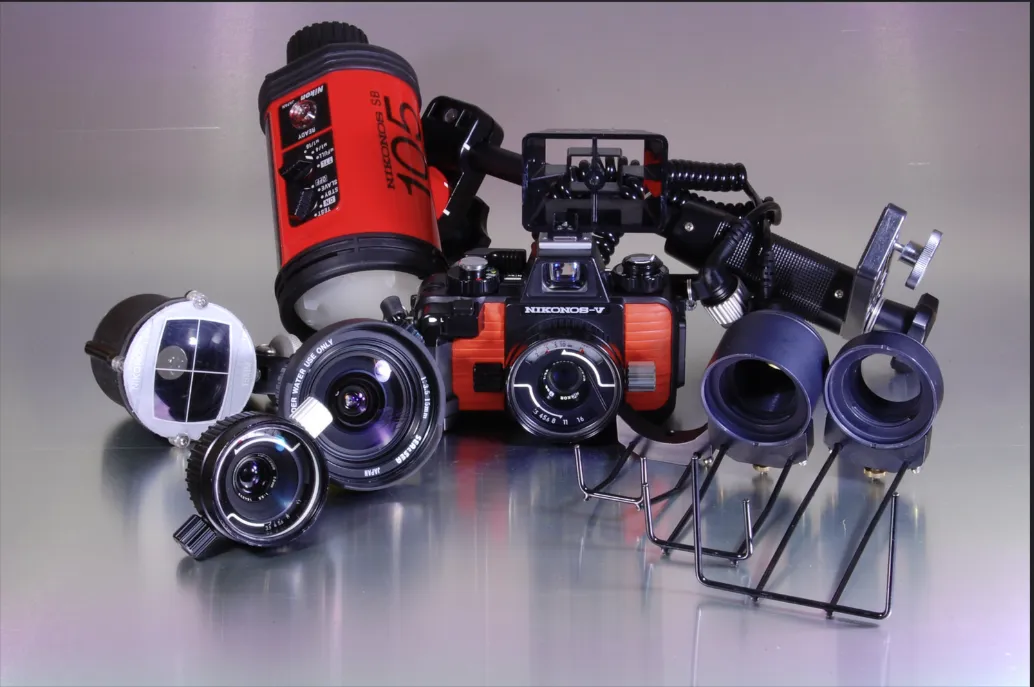
Underwater photography is compounded by the fact that one could never see the photo in the film camera days . This author has only used film cameras in the pictures depicted in this site. I Want to Remind younger viewers that a film camera had only 36 shots at those times. It was considered lucky if one could just get one perfect photo in a dive. Nikon camera company was the only company in the world that made dedicated underwater cameras and were called by the name of “NIKONOS”. Special flashes called strobes were need to take on the harsh salt water conditions , pressure and knocks that were inevitable while diving. All photographs were taken on Fujichrome velvia 50 asa and provia 100 asa slide film. The Kodak equivalent was kodakchrome 64 asa . All these were slide films . Dependable auto exposure with TTL flash was available only the Nikonos 5 model. Even then one could not be sure if the camera calculated right. All serious photographers always shot manually calculating the aperture, shutter speed, flash exposure intensity , focus etc. By the time all this was figured out the fish would have disappeared!!. Water is about 800 times denser than air and due to various factors a flash does not travel more than 10 ft in water .
The photographs were taken in various places- Maldives- lakshadeep -andamans.- Egypt red sea – and Papua new guinea. I started diving in 1993.